
In the realm of agriculture, precision farming has taken center stage, and the one row seed planter stands as a testament to this advancement. This remarkable device revolutionizes the art of seeding, offering farmers unparalleled control and efficiency.
The one row seed planter is an engineering marvel that combines advanced technology with meticulous design. Its fundamental principles lie in the precise metering and distribution of seeds, ensuring optimal spacing and depth control. This not only enhances crop yield but also reduces seed waste and optimizes resource utilization.
Functionality and Mechanism
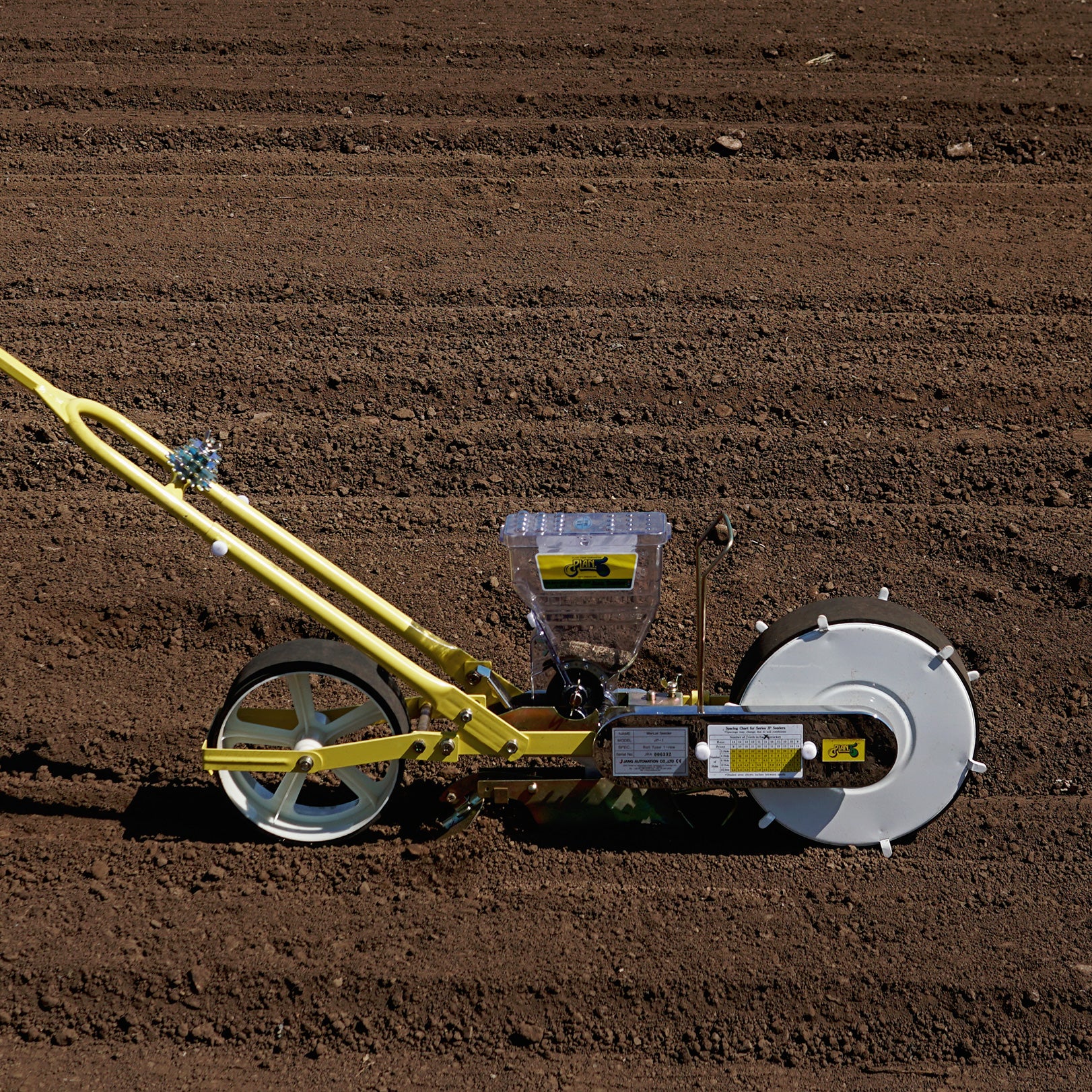
A one row seed planter is an agricultural implement designed to sow seeds in a single, straight row. It accomplishes this task through a series of synchronized mechanisms that ensure accurate seed placement, depth control, and soil preparation.
Seed Metering and Distribution System
The seed metering and distribution system is the heart of a one row seed planter. It is responsible for picking up individual seeds from the seed hopper and delivering them to the soil at the desired spacing and depth. Various metering mechanisms are employed, including:
- Plate-type meters: Consisting of a rotating plate with holes or indentations that carry seeds to the discharge point.
- Cup-type meters: Using rotating cups that scoop up seeds and deposit them into the seed tube.
- Belt-type meters: Employing a perforated belt that transports seeds from the hopper to the discharge point.
Soil Preparation and Seed Depth Control
Prior to seed placement, the soil must be prepared to provide an optimal environment for germination and growth. This involves creating a shallow furrow or trench, which is accomplished by a coulter or disc opener mounted in front of the seed metering system.
Seed depth control is crucial for ensuring proper seed-to-soil contact and moisture absorption. It is achieved through adjustable depth wheels or press wheels that follow the seed metering system and firm the soil over the planted seeds.
Types and Applications

One row seed planters are categorized based on their size, capacity, and automation level. The type of planter selected depends on the crop being planted, soil conditions, and the size of the field.
Smaller, hand-held planters are suitable for small gardens or fields, while larger, tractor-mounted planters are used for large-scale farming operations.
Manual Seed Planters
- Hand-held planters are lightweight and easy to operate, making them ideal for small gardens or planting in tight spaces.
- They are typically used for planting seeds that require precise spacing, such as vegetables or flowers.
- Manual planters come in various sizes and capacities, allowing users to choose the right tool for their specific needs.
Mechanical Seed Planters
- Mechanical seed planters are powered by a tractor or other engine and can plant seeds much faster than manual planters.
- They are typically used for planting large fields of crops such as corn, soybeans, or wheat.
- Mechanical planters can be equipped with a variety of attachments, such as fertilizer applicators or seed depth controllers, to meet the specific needs of different crops and soil conditions.
Pneumatic Seed Planters, One row seed planter
- Pneumatic seed planters use a vacuum or air pressure to plant seeds.
- They are particularly well-suited for planting small seeds, such as lettuce or carrots, which can be difficult to plant accurately with mechanical planters.
- Pneumatic planters can also be used to plant seeds in uneven or difficult-to-reach areas.
Examples of Successful Implementation
- In the Midwest, large-scale farmers use tractor-mounted mechanical seed planters to plant thousands of acres of corn and soybeans each year.
- In California, small-scale farmers use hand-held seed planters to plant specialty crops such as strawberries and artichokes.
- In developing countries, manual seed planters are used to plant a variety of crops, including rice, beans, and maize.
Design and Configuration: One Row Seed Planter

One row seed planters are designed to efficiently and precisely place seeds in the soil, ensuring optimal plant growth and yield. The key components of a one row seed planter include:
– Hopper: Holds the seeds and dispenses them into the seed tube.
– Seed tube: Guides the seeds from the hopper to the ground.
– Seed opener: Creates a furrow in the soil for seed placement.
– Seed covering device: Covers the seeds with soil to ensure proper germination.
The arrangement of these components is crucial for effective seed planting. The seed opener and covering device should be positioned accurately to ensure proper seed depth and coverage.
Planter settings play a vital role in the success of seed planting operations. Row spacing, seed rate, and depth adjustment are critical settings that should be adjusted according to the crop and soil conditions.
– Row spacing: Determines the distance between seed rows, influencing plant population and competition for resources.
– Seed rate: Specifies the number of seeds planted per unit area, affecting plant density and yield potential.
– Depth adjustment: Controls the depth at which seeds are placed in the soil, ensuring optimal moisture and temperature conditions for germination.
Selecting the appropriate planter configuration for different farming operations is essential. Factors to consider include:
– Crop type: Different crops have specific seed sizes, shapes, and planting requirements.
– Soil conditions: Soil texture, moisture, and compaction influence seed placement and germination.
– Farming practices: The scale of operation, available equipment, and labor availability affect the choice of planter configuration.
By understanding the design and configuration of one row seed planters, farmers can optimize their planting operations, ensuring accurate seed placement, proper seed coverage, and ultimately, successful crop production.

