Fire and Ice Plant, with its captivating name, is a unique and versatile plant that embodies the beauty of nature. Its contrasting colors and diverse uses make it a fascinating subject to explore.
This remarkable plant, known scientifically as Lampranthus spectabilis, boasts succulent leaves and vibrant flowers that range from fiery reds to icy whites. Its hardiness and adaptability make it a popular choice for gardeners, while its medicinal and culinary properties have been valued for centuries.
Fire and Ice Plant Characteristics
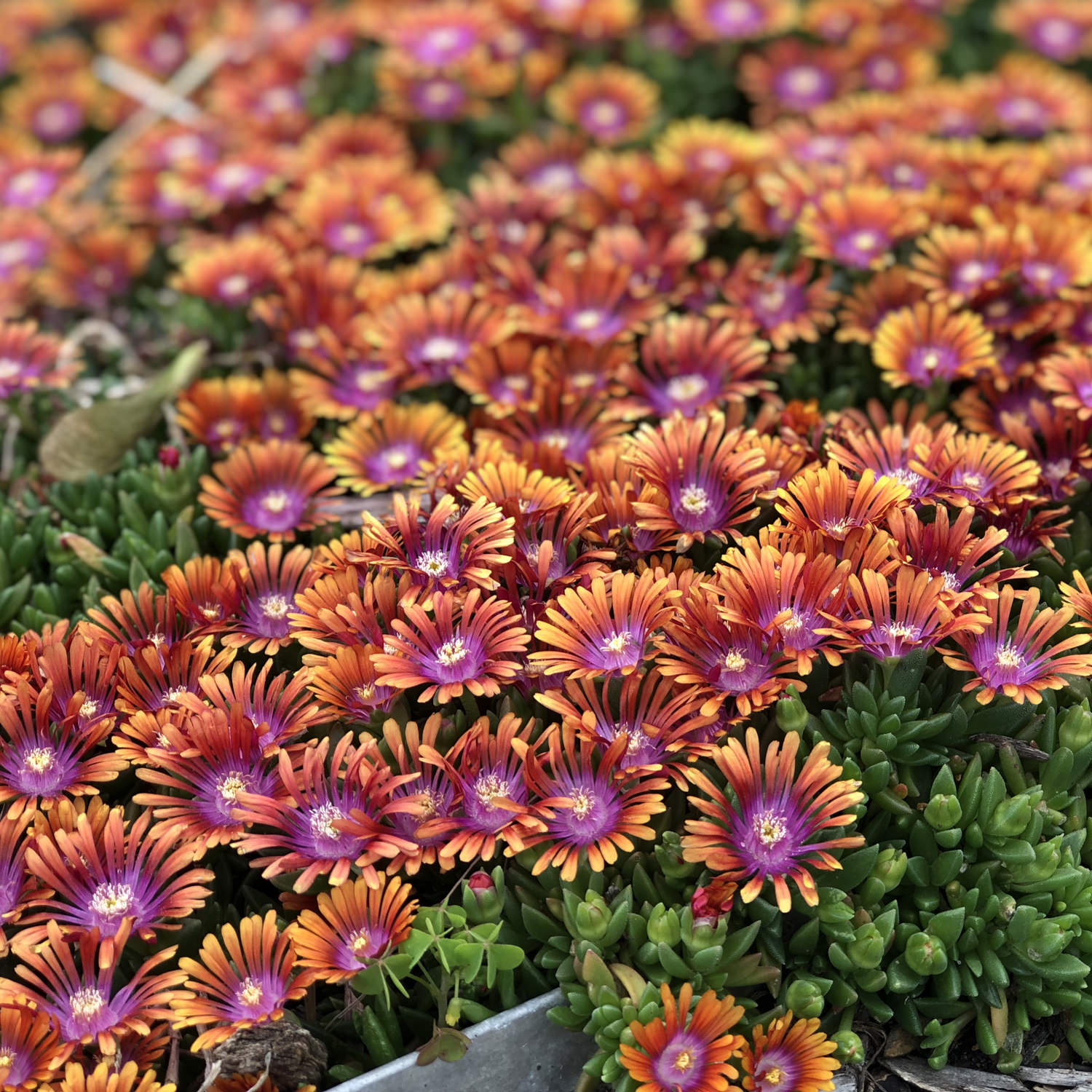
The fire and ice plant (Senecio mandraliscae) is a captivating succulent known for its striking foliage and vibrant blooms. This fascinating plant exhibits a unique combination of physical attributes that make it a standout in the botanical world.
Leaves, Fire and ice plant
The fire and ice plant’s leaves are the most distinctive feature, giving it its captivating appearance. They are fleshy, triangular-shaped, and arranged in a rosette pattern. The leaves’ margins are adorned with sharp, serrated teeth, resembling the jagged edges of ice. Their coloration is a captivating blend of hues, with shades of silvery-gray, green, and burgundy intermingling. The upper surface of the leaves displays an icy blue-green tint, while the undersides boast a warm burgundy hue. This remarkable combination of colors creates the illusion of fire and ice, giving the plant its name.
Stems
The stems of the fire and ice plant are relatively short and stout, typically reaching a height of 6-12 inches (15-30 cm). They are covered in fine, white hairs and are often tinged with shades of red or purple. The stems support the plant’s rosette of leaves and produce clusters of flowers during the blooming season.
Flowers
The fire and ice plant produces clusters of small, daisy-like flowers at the tips of its stems. The flowers have a bright yellow center and are surrounded by numerous narrow, white petals. The petals are often tinged with shades of pink or purple, adding to the plant’s vibrant display. The flowers bloom profusely in the spring and summer, creating a captivating spectacle that attracts pollinators.
Growth Habit, Size, and Hardiness Zones
The fire and ice plant is a perennial succulent that typically forms a compact, mounding habit. It can reach a height and width of 6-12 inches (15-30 cm). This plant is native to the Canary Islands and prefers well-drained soil and full sun to partial shade. It is hardy in USDA hardiness zones 9-11, making it suitable for cultivation in warm climates.
Origin and Etymology of the Plant’s Name
The fire and ice plant derives its name from the captivating combination of colors displayed in its foliage. The silvery-blue and icy green hues of the leaves are reminiscent of ice, while the burgundy undersides resemble fire. The plant’s botanical name, Senecio mandraliscae, honors the Mandralisca family, who were patrons of botany in Sicily during the 19th century.
Fire and Ice Plant Cultivation
Fire and ice plants, with their striking foliage and adaptability, are relatively easy to cultivate. By understanding their specific requirements, you can ensure their optimal growth and showcase their unique beauty.
Propagation
Fire and ice plants can be propagated through stem cuttings or seeds. Stem cuttings should be taken from healthy, mature plants during the growing season. Remove a 4-6 inch stem, remove the lower leaves, and dip the cut end in rooting hormone. Plant the cutting in a well-draining potting mix and keep it moist. Seeds can be sown directly in the garden in the spring or started indoors 6-8 weeks before the last frost.
Soil Conditions
Fire and ice plants prefer well-drained soil with a pH between 6.0 and 7.0. They can tolerate a wide range of soil types, but they perform best in sandy or loamy soil that allows for good drainage.
Sunlight Requirements
Fire and ice plants thrive in full sun to partial shade. They require at least 6 hours of sunlight per day to produce their vibrant foliage. However, they can tolerate some shade, especially during the hottest part of the day.
Watering Needs
Fire and ice plants are drought-tolerant and do not require frequent watering. Allow the soil to dry out completely between waterings. Overwatering can lead to root rot and other problems.
Fertilizing
Fire and ice plants do not require heavy fertilization. A light application of a balanced fertilizer once a month during the growing season is sufficient.
Pruning
Fire and ice plants do not require extensive pruning. However, you can remove any dead or damaged leaves or stems to maintain a neat and healthy appearance.
Maintenance
To maintain healthy fire and ice plants, remove any weeds that may compete for water and nutrients. Mulching around the plants can help retain moisture and suppress weeds.
Fire and Ice Plant Uses

Fire and ice plants have diverse applications in ornamental gardening, traditional medicine, and culinary arts.
Ornamental Uses
Fire and ice plants are popular ornamental plants due to their striking foliage and adaptability to various climates. They are often used in rock gardens, succulent arrangements, and coastal landscapes. Their vibrant colors and unique textures create eye-catching displays.
Medicinal Uses
Traditionally, fire and ice plants have been used in various cultures for their purported medicinal properties. Studies have shown that the plant contains compounds with antioxidant, anti-inflammatory, and antibacterial effects. It has been used to treat skin conditions, wounds, and digestive ailments.
Culinary Uses
Fire and ice plants are edible and can be incorporated into various culinary dishes. The leaves have a slightly salty and tangy flavor, similar to sea asparagus. They can be consumed raw in salads, added to stir-fries, or pickled. The flowers are also edible and can be used as a garnish.
Here’s a simple recipe for a fire and ice plant salad:
Ingredients:
* 1 cup fire and ice plant leaves, chopped
* 1/2 cup cherry tomatoes, halved
* 1/4 cup red onion, thinly sliced
* 1/4 cup feta cheese, crumbled
* 2 tablespoons olive oil
* 1 tablespoon lemon juice
* Salt and pepper to taste
Instructions:
1. Combine all ingredients in a bowl.
2. Toss to combine.
3. Serve immediately.